Emigration Stories
“Nostalgia is a feeling — a universal language that nourishes culture, literature, the warmth of memory and knowledge, and the hope of a journey in search of one’s origins.
We are all children of a return home — or of a return that never happened.
However you look at it, each of us must come to terms with our roots in order to reconnect with the present of our own existence.”
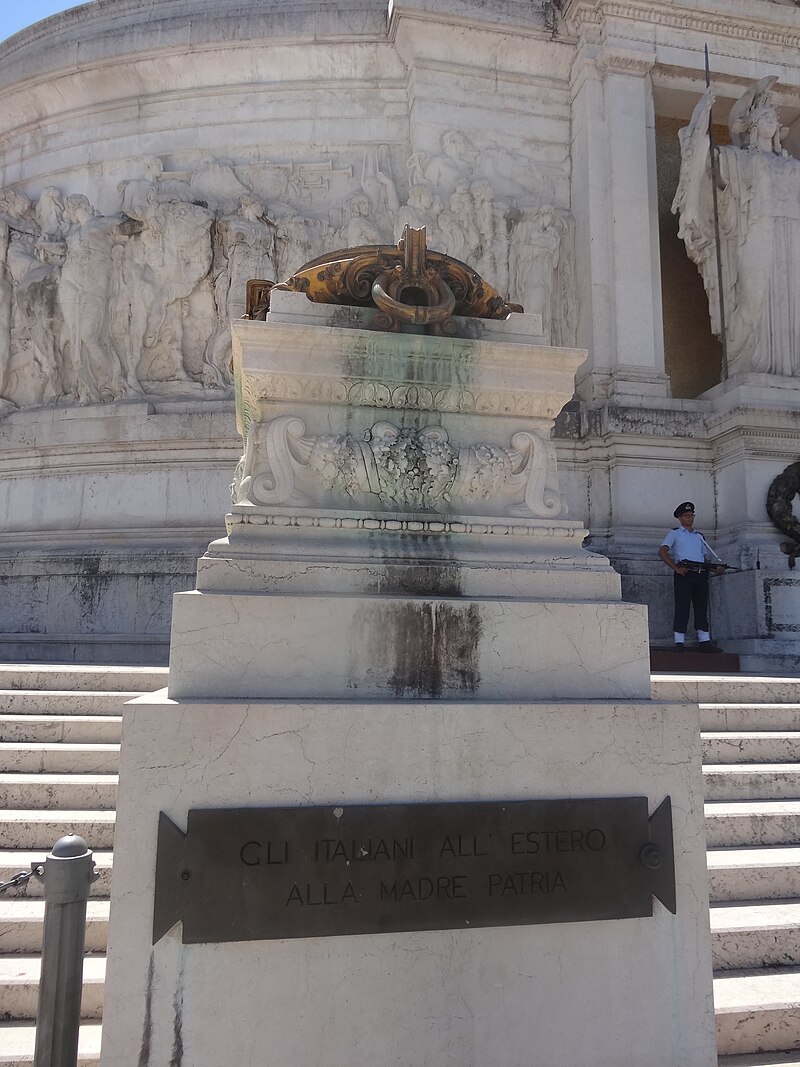
Italians Abroad and the Motherland
“Italians Abroad to the Motherland” — this is what is inscribed on the braziers of the Altare della Patria (Altar of the Fatherland) in Rome. These words honor Italian emigrants who, in their pursuit of a better life, made generous donations that contributed to the construction of this national monument.
Today, their descendants are numerous and widespread, often seeking to reconnect with their Italian heritage. In fact, they outnumber those living within Italy’s borders: nearly 80 million people of Italian descent live abroad, compared to approximately 60 million residents in Italy. This massive diaspora allows us to view the Italian emigration between the late 19th and early 20th centuries as a true expansion of the Italian nation.
Through this peaceful expansion into their host countries, Italians brought with them their language, ancient traditions, culture, and the history and civilization of which they are heirs — Italic, Roman, Medieval, and Renaissance — all forming a continuum that still today offers symbols, ideas, and inspiration to modernity in its various forms: power, art, economy, and communication.
The civic values of Italians have long been recognized and celebrated — not only in literature and monuments but also in the six allegories that adorn the Altare della Patria, which represent:
Strength, Law, Concord, Action, Thought, and Sacrifice.
For centuries, Italians have been explorers, inventors, and seekers of new routes — by land and sea — in pursuit of economic and social development. They have a long tradition as travelers, merchants, explorers, and migrants, driven by a uniquely Italian instinct: the need for action, to never stop, and always push forward toward destiny — toward the unknown.
Italians Around the World
Beyond the legendary explorers and navigators such as Marco Polo, Christopher Columbus, and Amerigo Vespucci, the global spread of Italian identity was largely shaped by countless lesser-known individuals — men and women whose stories are woven into the fabric of Italy’s history and that of its many regions. These people helped reshape the geography and history of entire continents and the cultures that existed there, with their unique traditions and customs.
From the 1800s onward, and especially after the Unification of Italy, Italians began emigrating to other countries for many reasons — primarily to seek better job opportunities and a chance for a better future.
Between 1880 and 1920, millions of Italians left for Brazil, Argentina, the United States, Canada, and other countries. Today, it is estimated that there are around 80 million people of Italian descent living outside of Italy.
Most of these emigrants were working-class Italians, farmers and laborers from rural areas, who sought to escape poverty and improve their lives abroad.
The migration wave also included skilled artisans, highly valued abroad for their craftsmanship and strong work ethic.
What united them all was a deep connection to their origins, to their hometowns and villages. They called each other “Paisans” — meaning paesani, or “people from the same village” — to distinguish themselves from city dwellers, the “Civies” (civili).
Before 1890, the majority of Italian emigrants came from northern Italy.
Afterward, most emigration shifted toward southern Italy: Abruzzo, Molise, Campania, Puglia, Basilicata, Calabria, Sicily, and Sardinia.
Between 30% and 50% of Italian emigrants returned to Italy within five years. Those who remained abroad planted their deep love for family, culture, and heritage in their new countries. Many also sent money back home, supporting their families who had stayed behind in Italy.
The main ports of departure from Italy were Genoa, Naples, and Palermo.
The primary countries of destination were Brazil, Argentina, the United States, Venezuela, and Canada — as shown in the table below, which provides numerical estimates of Italians abroad and their descendants.
Tracing Your Ancestors: The Archives
The 80 million descendants of Italian immigrants living abroad are often eager to discover their origins and the history of the families they come from.
But how can one reconstruct their family history?
The main tools are civil registers and parish archives.
The history of civil records in Italy has ancient roots, dating back to Roman law, though initially they applied only to a part of the population — those who had a surname. Over the centuries, the practice evolved: from the Council of Trent (1563) to Napoleon’s decree (1806), and later through various legal reforms of the modern Italian state. These developments gradually shaped the concept of civil status, the legal identity of a person in society — as a citizen, a spouse, or a child.

After 1806, during the Napoleonic era, the obligation to use surnames and to keep official civil records was introduced, especially in areas that had previously relied only on church records. The system was strictly enforced and continued, in various forms, after Napoleon’s fall in 1815.
From 1815 to 1865, in Southern Italy, a civil registration system known as the Bourbon Civil Status (Stato Civile Borbonico) was adopted. It was introduced by Ferdinand I of Bourbon, King of Naples, and included changes to the Napoleonic system in both the structure and maintenance of the civil records.
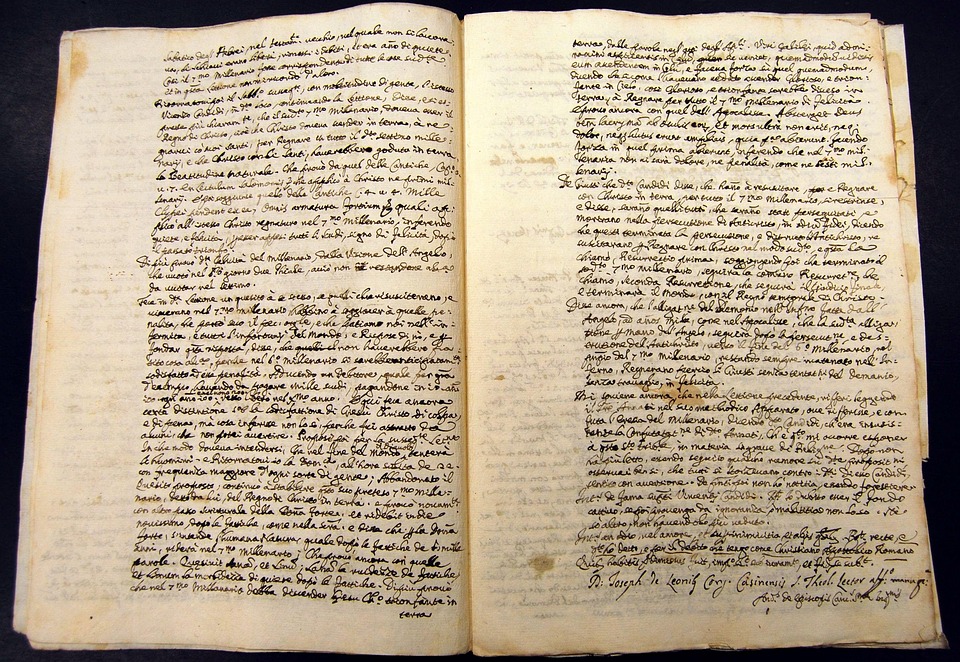
That same year marked the official birth of the Italian Civil Registry, which began collecting records drafted under the new unified Italian government.
Before 1866, these documents were typically handwritten, since pre-printed forms were not always available. By around 1875, printed forms became more common, and the names of many Italian jurisdictions began to change.
In addition to this diverse historical, political, and administrative landscape, another essential source for research is the parish and diocesan archives of the Catholic Church. These are often not digitized and exist only in paper format, but they usually go much further back in time than the Italian civil records.
It was the Council of Trent in 1563 that first required parish priests to register the names and surnames of their parishioners in special parish registers. These included records of baptisms, confirmations, marriages, and funerals.
Since that decree, the clergy has faithfully maintained these registers. In nearly every city, village, or hamlet in Italy with a parish, the Catholic Church has recorded the births, deaths, and marriages of almost every Italian since at least the early 1600s.
Given that most Italian families did not relocate often, it is often possible to reconstruct up to four centuries of family history from the records of a single parish.